Beautiful, abundant, and a leading cause of vehicle collisions in Canada.
The Animal
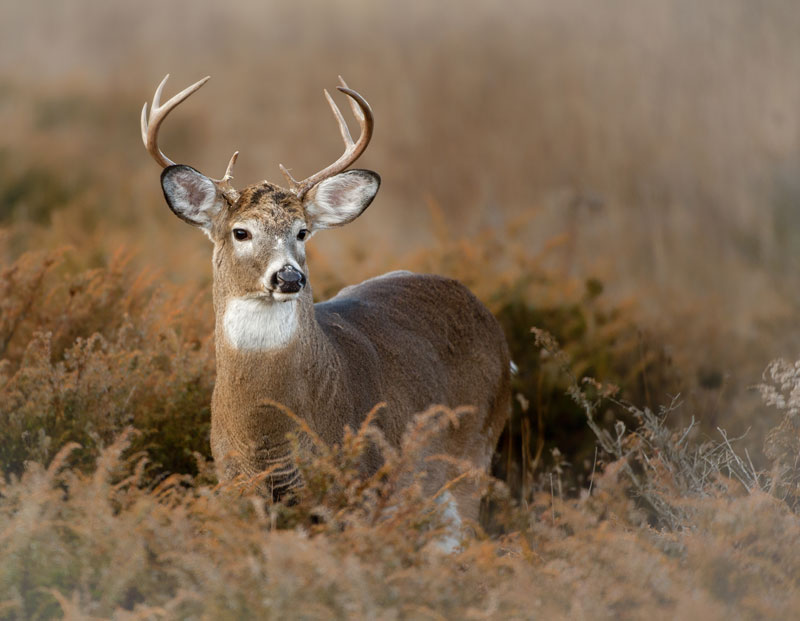
The white-tailed deer is the most widely distributed large mammal in Canada, found in every province except Newfoundland and Labrador. They are highly adaptable and have thrived in the patchwork of forests, farmland, and suburbs that characterizes much of southern Canada. Their population has grown significantly in recent decades, bringing them into increasingly frequent contact with people.
Why Conflict Happens
Deer-human conflict takes several forms. Vehicle collisions are the most dangerous — deer are responsible for tens of thousands of accidents annually in Canada, causing significant injuries, deaths, and property damage. Garden and crop damage is a constant frustration for homeowners and farmers. Deer also serve as the primary host for the blacklegged tick, the vector for Lyme disease, which is an emerging public health concern across much of Canada.
Guidance by Audience
🚗 Drivers
- →Be especially alert at dawn and dusk when deer are most active.
- →Slow down in areas marked with deer crossing signs.
- →If you see one deer, expect more — they rarely travel alone.
- →Do not swerve to avoid a deer. Brake firmly and hold your lane.
- →If a collision is unavoidable, let off the brakes just before impact to raise the front of the vehicle.
Other Species in the Guide