The world's largest land predator — and a species on the front line of climate change.
The Animal
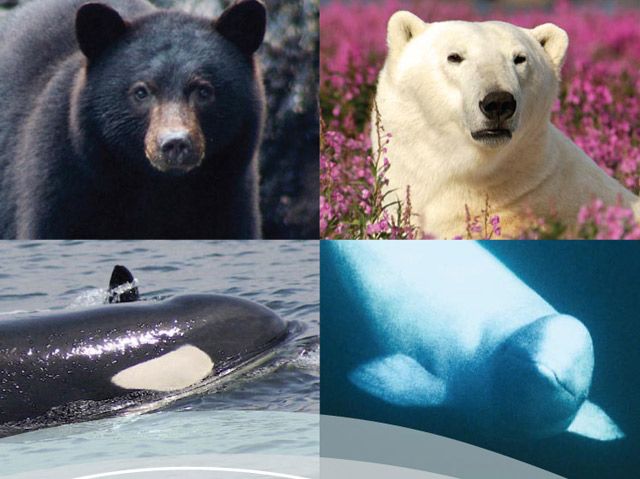
The polar bear is the world's largest terrestrial carnivore and one of Canada's most iconic species. Found in the Arctic regions of Nunavut, the Northwest Territories, Manitoba, Ontario, and Quebec, polar bears are uniquely adapted to life on sea ice, where they hunt ringed and bearded seals. Canada is home to approximately 60% of the world's polar bear population, spread across 13 of the 19 recognized subpopulations. Churchill, Manitoba — the 'Polar Bear Capital of the World' — is where the bears' southward migration to Hudson Bay brings them into direct contact with a human community every fall.
Why Conflict Happens
Polar bear-human conflict is concentrated in Arctic and sub-Arctic communities where bears and people share the same landscape. As sea ice forms later and melts earlier due to climate change, bears spend more time on land, increasing the duration and frequency of encounters with communities. Churchill has developed one of the world's most sophisticated polar bear management programs, including the famous 'Polar Bear Jail' — a holding facility where problem bears are held and then airlifted back to the ice.
Guidance by Audience
🏘️ Arctic & Sub-Arctic Community Residents
- →Never leave food, garbage, or attractants outside — polar bears have an extraordinary sense of smell.
- →Travel in groups and carry deterrents (bear spray, noise makers, flares) when outside the community perimeter.
- →Know your community's polar bear alert system and evacuation protocols.
- →Report polar bear sightings immediately to your local conservation officer or polar bear alert program.
- →Do not approach polar bears for photographs — they are ambush predators and faster than they appear.
- →If a polar bear approaches, do not run. Back away slowly while facing the bear and make yourself look large.
Other Species in the Guide